
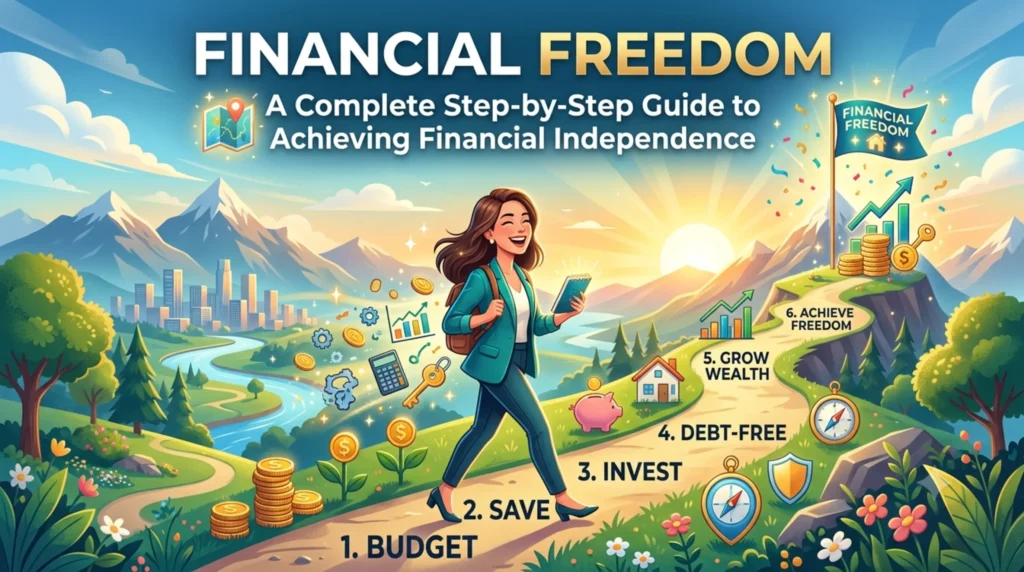
Financial freedom is a dream for millions of people around the world. It means having enough money to live comfortably without constantly worrying about bills, debt, or unexpected expenses. Financial freedom does not necessarily mean becoming a millionaire. Instead, it means having control over your money rather than allowing money to control your life.
Many people believe financial independence is only possible for people with high-paying jobs or successful businesses. In reality, financial freedom is built through consistent habits, smart financial decisions, and long-term planning. People from different income levels can improve their financial future by following simple but effective money management strategies.
The journey to financial independence takes time, but every positive financial decision brings you one step closer. Whether you are starting your first job, running a small business, or planning for retirement, the principles of financial freedom remain the same.
This guide explains practical steps that anyone can follow to achieve financial independence and build lasting wealth.
What Is Financial Freedom?
Financial freedom means having enough income, savings, and investments to support your lifestyle without depending entirely on a monthly paycheck.
When you achieve financial freedom, you can:
- Pay your bills comfortably
- Handle emergencies without borrowing
- Save for future goals
- Invest for long-term growth
- Make career choices based on passion instead of financial pressure
- Enjoy greater peace of mind
Financial freedom looks different for everyone. For some people, it means retiring early. For others, it means living debt-free and having enough savings to support their family.
Why Financial Freedom Matters
Money affects almost every part of life. Poor financial management often leads to stress, while healthy financial habits provide stability and confidence.
Some of the biggest benefits include:
- Reduced financial anxiety
- Greater career flexibility
- Better preparation for emergencies
- Improved quality of life
- More opportunities to invest
- Stronger family financial security
- Ability to achieve personal goals
The earlier you begin working toward financial independence, the easier the journey becomes.
Step 1: Understand Your Current Financial Situation
Before improving your finances, you need to know where you stand.
Calculate:
- Monthly income
- Monthly expenses
- Total savings
- Total debt
- Investment value
- Net worth
Your net worth equals everything you own minus everything you owe.
Tracking these numbers gives you a clear starting point.
Step 2: Create a Realistic Budget
A budget helps you control your spending instead of letting your spending control you.
Begin by dividing expenses into categories such as:
- Housing
- Food
- Transportation
- Utilities
- Insurance
- Entertainment
- Savings
- Investments
One popular budgeting strategy is the 50/30/20 rule.
- 50 percent for essential expenses
- 30 percent for personal spending
- 20 percent for saving and investing
Review your budget every month and adjust it as your financial situation changes.
Step 3: Build an Emergency Fund
Unexpected expenses are part of life.
A strong emergency fund protects you from financial setbacks such as:
- Medical emergencies
- Job loss
- Home repairs
- Vehicle repairs
- Family emergencies
Aim to save three to six months of essential living expenses.
If that feels difficult, begin with your first $500 or $1,000 and build from there.
Step 4: Eliminate High-Interest Debt
Debt can slow your journey toward financial freedom.
Focus first on paying off debts with the highest interest rates, including:
- Credit cards
- Payday loans
- Personal loans
Continue making minimum payments on other debts while directing extra money toward your highest-interest balance.
Once one debt is paid off, move to the next until you become debt-free.
Step 5: Save Consistently
Saving should become a regular habit rather than an occasional activity.
Treat savings like a monthly bill.
Automate transfers into your savings account immediately after receiving your paycheck.
Even saving a small percentage of your income consistently can produce impressive long-term results.
Step 6: Start Investing
Saving alone may not be enough to build long-term wealth because inflation reduces purchasing power over time.
Investing allows your money to grow.
Popular investment options include:
- Stock index funds
- Exchange Traded Funds (ETFs)
- Mutual funds
- Government bonds
- Dividend-paying stocks
- Real estate
Choose investments that match your goals and risk tolerance.
Remember that investing is generally most effective over the long term.
Step 7: Increase Your Income
Reducing expenses is helpful, but increasing income often has an even greater impact.
Ways to earn additional income include:
- Freelancing
- Consulting
- Selling digital products
- Online tutoring
- Affiliate marketing
- Starting an online business
- Rental income
- Part-time work
Additional income can be used to increase savings, pay off debt, or invest.
Step 8: Avoid Lifestyle Inflation
Lifestyle inflation happens when spending increases every time income increases.
For example, receiving a salary raise does not automatically mean you need a more expensive car or a larger house.
Instead of spending every extra dollar, increase your savings and investments.
Maintaining modest spending habits allows wealth to grow much faster.
Step 9: Improve Your Financial Knowledge
Financial education is a lifelong investment.
Spend time learning about:
- Budgeting
- Investing
- Taxes
- Insurance
- Retirement planning
- Credit management
- Wealth building
The more you understand money, the better your financial decisions will become.
Step 10: Set SMART Financial Goals
Financial goals should be:
- Specific
- Measurable
- Achievable
- Relevant
- Time-bound
Examples include:
- Save $10,000 for a home down payment within two years.
- Pay off all credit card debt in twelve months.
- Invest 15 percent of monthly income every month.
- Build a six-month emergency fund before next year.
Clear goals provide direction and motivation.
Step 11: Protect Your Wealth
Building wealth takes years, but protecting it is equally important.
Consider:
- Health insurance
- Life insurance
- Home insurance
- Vehicle insurance
- Estate planning
- Identity theft protection
Proper financial protection reduces the impact of unexpected events.
Step 12: Stay Patient and Consistent
Financial freedom is rarely achieved overnight.
Successful wealth builders focus on consistent progress rather than quick results.
Continue:
- Saving regularly
- Investing consistently
- Learning continuously
- Reviewing your financial plan
- Avoiding unnecessary debt
Small improvements repeated over many years create extraordinary outcomes.
Common Obstacles to Financial Freedom
Many people struggle because of avoidable financial habits.
Examples include:
- Spending more than they earn
- Ignoring budgets
- Delaying investing
- Depending entirely on credit cards
- Failing to save for emergencies
- Making emotional purchases
- Chasing quick-rich schemes
- Not reviewing financial progress
Recognizing these habits early helps you avoid costly mistakes.
Daily Habits That Support Financial Success
Developing healthy daily habits strengthens your financial future.
Try to:
- Track every expense
- Save before spending
- Compare prices before buying
- Avoid impulse purchases
- Read about personal finance regularly
- Review your financial goals each month
These simple actions become powerful over time.
Frequently Asked Questions
How long does it take to achieve financial freedom?
The timeline depends on your income, spending habits, savings rate, and investments. Many people make significant progress within several years through consistent financial discipline.
Can I achieve financial freedom with an average income?
Yes. Financial freedom depends more on how you manage money than on how much you earn. Consistent saving, budgeting, and investing can produce excellent long-term results.
What is the first step toward financial independence?
Understanding your current financial situation and creating a realistic monthly budget are the best places to begin.
Should I save or invest first?
Build a small emergency fund first, then focus on paying off high-interest debt. After that, continue saving while investing regularly for long-term growth.
Is financial freedom the same as being rich?
No. Many wealthy people are not financially free because of excessive debt or spending. Financial freedom means having enough financial resources to support your lifestyle without constant financial stress.
Final Thoughts
Financial freedom is not achieved through luck or overnight success. It is the result of disciplined financial habits practiced consistently over time.
By creating a realistic budget, eliminating unnecessary debt, building an emergency fund, investing wisely, increasing your income, and continuing to improve your financial knowledge, you can steadily move toward financial independence.
Remember that every dollar saved, every debt paid off, and every smart investment brings you closer to your goals. Start with small, manageable steps and remain committed to your financial plan.
The journey may take years, but the rewards of financial freedom—security, confidence, flexibility, and peace of mind—are well worth the effort. The best day to begin building your financial future is today.
About the Author
