Money plays an important role in every part of life. Whether you want to buy a home, pay off debt, travel more, or simply stop worrying about your monthly bills, having a budget is one of the most effective ways to take control of your finances.
Unfortunately, many people believe budgeting means giving up everything they enjoy. In reality, a good budget does the opposite. It gives you the freedom to spend confidently because you know your finances are under control. Instead of wondering where your money went each month, you decide where it will go before you spend it.
Creating a budget does not require advanced financial knowledge or expensive software. Anyone can build a simple system that helps manage income, reduce unnecessary spending, and increase savings.
In this guide, you will learn exactly how to create a personal budget that works, why most budgets fail, and how to develop financial habits that lead to long-term success.
What Is a Personal Budget?
A personal budget is a financial plan that tracks your income and expenses over a specific period, usually one month.
It helps you understand:
- How much money you earn
- How much money you spend
- Where your money goes
- How much you can save
- Whether you are living within your means
A budget is not meant to limit your lifestyle. Instead, it helps you spend your money on the things that matter most while avoiding unnecessary financial stress.
Why Budgeting Is Important
Many people earn good incomes but still struggle financially because they do not manage their money effectively.
A well-planned budget can help you:
- Control unnecessary spending
- Build healthy financial habits
- Save for future goals
- Pay off debt faster
- Reduce financial stress
- Prepare for emergencies
- Invest with confidence
- Achieve financial independence
Even a simple budget can make a significant difference over time.
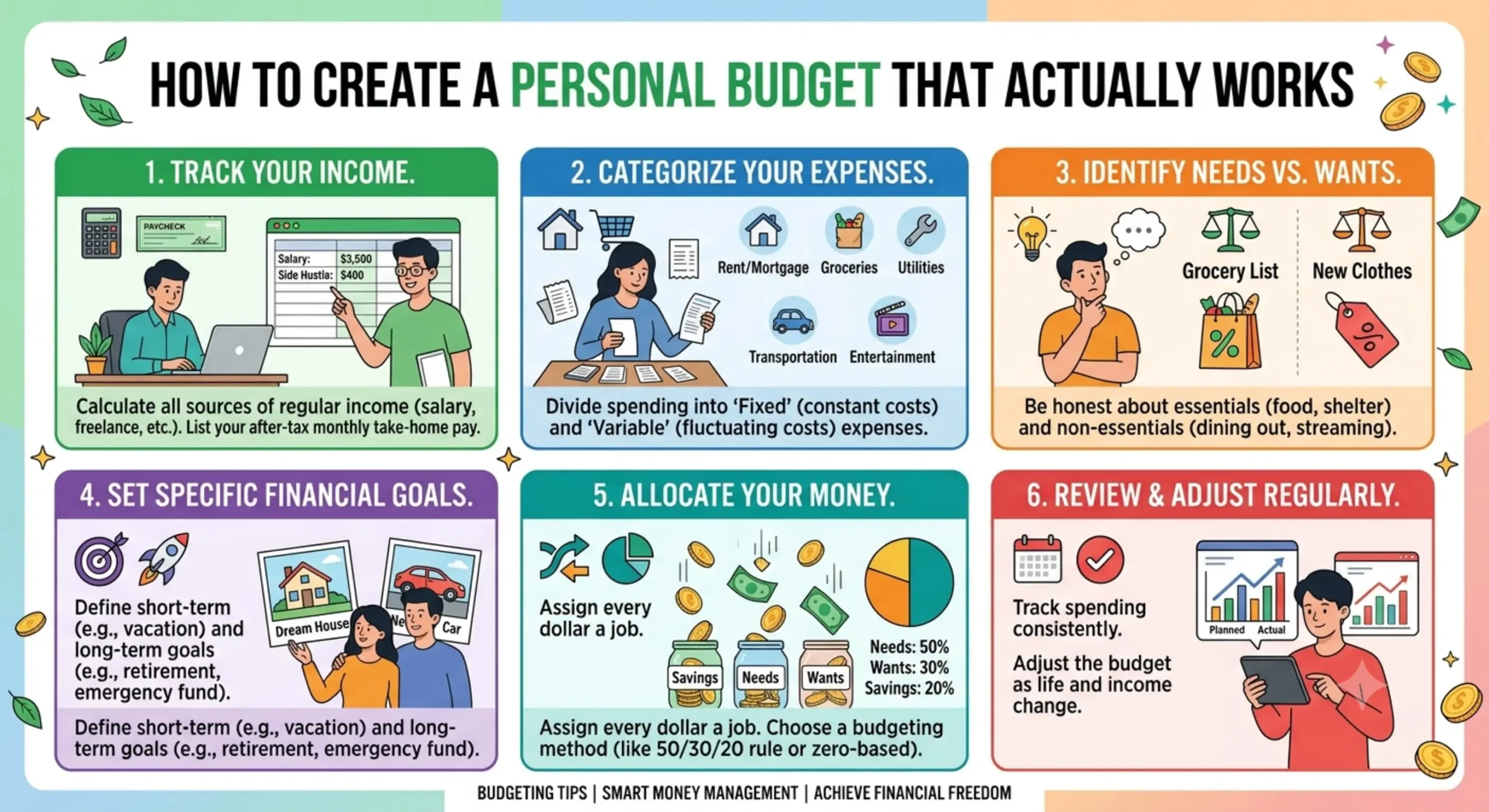
Step 1: Calculate Your Monthly Income
The first step is knowing exactly how much money you receive each month.
Include all reliable income sources such as:
- Salary
- Freelance income
- Business profits
- Rental income
- Investment income
- Side hustle earnings
If your income changes every month, calculate the average income from the last six to twelve months.
Using an accurate income figure helps create a realistic budget.
Step 2: List Every Monthly Expense
Many people underestimate how much they spend.
Start by writing down every expense.
Fixed Expenses
These usually stay the same every month.
Examples include:
- Rent or mortgage
- Insurance
- Internet service
- Phone bill
- Loan payments
- School fees
Variable Expenses
These change from month to month.
Examples include:
- Groceries
- Fuel
- Dining out
- Entertainment
- Shopping
- Transportation
- Utility bills
Do not forget smaller expenses like coffee, food delivery, online subscriptions, and impulse purchases. These small costs often add up faster than expected.
Step 3: Separate Needs From Wants
A successful budget distinguishes between essential expenses and optional spending.
Needs
Needs are necessary for daily living.
These include:
- Housing
- Food
- Transportation
- Healthcare
- Utilities
- Insurance
Wants
Wants improve your lifestyle but are not essential.
Examples include:
- Streaming services
- Luxury shopping
- Vacations
- Dining at restaurants
- Premium subscriptions
- Entertainment
Reducing unnecessary wants creates more room for savings and investments.
Step 4: Choose a Budgeting Method
Different budgeting systems work for different people.
The 50/30/20 Rule
This is one of the easiest budgeting methods.
Allocate:
- 50 percent for essential needs
- 30 percent for personal wants
- 20 percent for savings and investments
This approach is simple and flexible for most households.
Zero-Based Budget
With this method, every dollar has a purpose.
Income minus expenses equals zero because every dollar is assigned to spending, saving, investing, or debt repayment.
This budgeting style works well for people who want complete control over their finances.
Envelope Budget
This traditional method involves dividing cash into envelopes for different spending categories such as groceries, transportation, and entertainment.
When an envelope is empty, spending in that category stops until the next month.
Many budgeting apps now offer digital versions of this system.
Step 5: Set Financial Goals
Budgeting becomes much easier when you have clear goals.
Examples include:
Short-term goals:
- Build an emergency fund
- Pay off a credit card
- Save for a vacation
- Buy a laptop
Long-term goals:
- Purchase a home
- Start a business
- Save for retirement
- Build investment wealth
Clear goals increase motivation and help you stay committed.
Step 6: Build an Emergency Fund
Life is unpredictable.
Unexpected medical bills, car repairs, or job loss can disrupt your finances.
Aim to save three to six months of living expenses.
If that feels overwhelming, begin with your first $500 or $1,000.
Store this money in a separate savings account that is easy to access during emergencies but not for everyday spending.
Step 7: Reduce Unnecessary Spending
You do not have to eliminate all enjoyable purchases.
Instead, identify spending that adds little value to your life.
Common areas where people overspend include:
- Multiple streaming subscriptions
- Daily takeaway coffee
- Impulse online shopping
- Expensive phone upgrades
- Unused gym memberships
- Frequent food delivery
Redirecting even a small amount of this money into savings can produce impressive long-term results.
Step 8: Automate Your Savings
One of the easiest ways to build wealth is by saving automatically.
Arrange for a portion of your income to be transferred into savings as soon as you are paid.
This approach helps you:
- Save consistently
- Avoid overspending
- Reach financial goals faster
Many banks allow automatic transfers, making the process effortless.
Step 9: Review Your Budget Every Month
A budget is not something you create once and forget.
Your financial situation changes over time.
At the end of each month, review:
- Income changes
- Unexpected expenses
- Savings progress
- Spending habits
- Debt reduction
Make adjustments where necessary.
Regular reviews help your budget stay realistic and effective.
Common Budgeting Mistakes
Many budgets fail because of avoidable mistakes.
Some of the most common include:
- Setting unrealistic spending limits
- Forgetting irregular expenses
- Ignoring small purchases
- Not tracking spending
- Giving up after one bad month
- Failing to update the budget
- Depending too much on credit cards
Remember that budgeting is about progress, not perfection.
Helpful Budgeting Tools
You do not need expensive software to manage your money.
Popular options include:
- A simple notebook
- Spreadsheet programs
- Budgeting apps
- Bank spending reports
- Mobile expense trackers
Choose whichever system you will actually use consistently.
Budgeting Tips for Beginners
If you are new to budgeting, these habits can make the process easier:
- Track every expense for one month.
- Save before spending.
- Avoid emotional shopping.
- Compare prices before buying.
- Review subscriptions regularly.
- Cook more meals at home.
- Set realistic financial goals.
- Celebrate small financial wins.
Consistency matters far more than perfection.
Benefits of Following a Budget
People who follow a monthly budget often experience:
- Greater financial confidence
- Lower stress levels
- Better saving habits
- Faster debt repayment
- Improved spending decisions
- More successful investing
- Better preparation for emergencies
These benefits compound over time, creating a stronger financial future.
Frequently Asked Questions
How often should I update my budget?
Review your budget at least once each month. If your income changes frequently, consider checking it every week.
Is budgeting only for people with low incomes?
No. Budgeting benefits everyone, regardless of income level. Higher earners also need financial planning to manage spending, investments, and savings effectively.
Should I budget every dollar?
Many people find that assigning every dollar a purpose helps prevent wasteful spending. However, choose the method that best fits your lifestyle and financial goals.
Can budgeting help me get out of debt?
Yes. A well-planned budget allows you to identify unnecessary spending and direct more money toward debt repayment.
What if I exceed my budget?
Do not give up. Review what caused the overspending, adjust your plan, and continue improving next month. Budgeting is a long-term habit, not a one-time task.
Final Thoughts
Creating a personal budget is one of the smartest financial decisions you can make. It gives you a clear understanding of your income, spending, savings, and financial priorities.
The best budget is not the most complicated one. It is the one you can follow consistently. Start by tracking your income and expenses, setting realistic goals, reducing unnecessary spending, and reviewing your progress each month.
Over time, these simple habits can help you eliminate financial stress, build savings, pay off debt, and move closer to financial freedom. Every successful financial journey begins with a single step, and creating your first budget is one of the most important steps you can take today.
About the Author
