
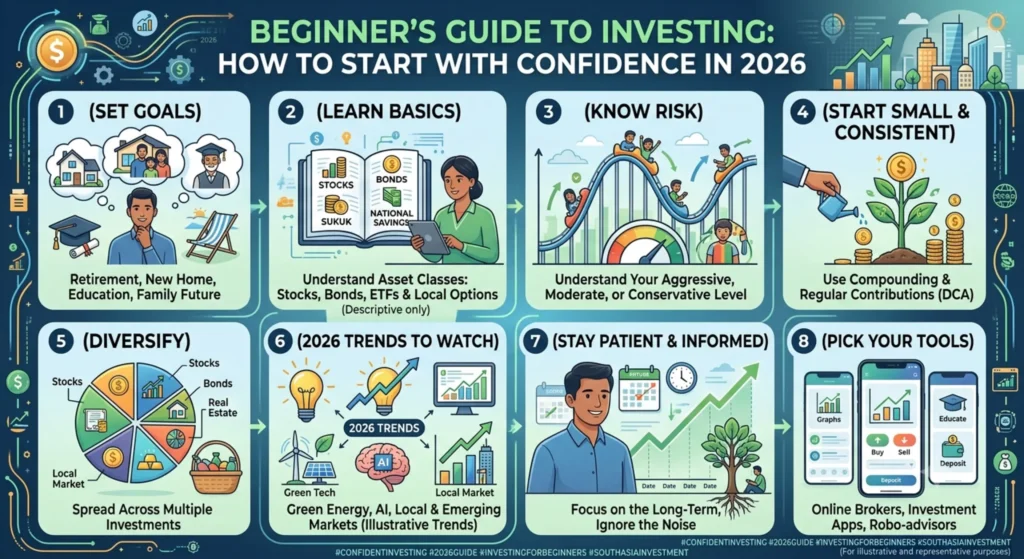
Investing is one of the most effective ways to grow your money over time. While saving helps protect your income, investing gives your money the opportunity to increase in value and outpace inflation. Unfortunately, many people avoid investing because they believe it is too complicated or requires a large amount of money.
The truth is that anyone can start investing with the right knowledge and a clear plan. You do not need to be a financial expert or have thousands of dollars to begin. What matters most is starting early, investing consistently, and making informed decisions.
This guide explains the basics of investing, the different types of investment options, common mistakes to avoid, and practical strategies to help beginners build wealth with confidence.
What Is Investing?
Investing means putting your money into assets that have the potential to grow in value over time. Unlike saving, where your money earns a small amount of interest, investing allows you to earn returns through price appreciation, dividends, or interest.
The goal of investing is to grow your wealth while working toward long-term financial goals such as buying a home, funding education, or retiring comfortably.
Why Should You Invest?
Many people keep all of their money in a savings account. While savings are important for emergencies, they usually do not provide enough growth to build significant wealth over the long term.
Here are some key reasons to invest:
- Grow your money over time
- Beat inflation
- Build wealth for retirement
- Generate passive income
- Achieve financial independence
- Reach long-term financial goals faster
Investing allows your money to work for you instead of remaining idle.
How Investing Builds Wealth
One of the biggest advantages of investing is compound growth.
Compound growth means you earn returns not only on your original investment but also on the returns you have already earned.
For example, if you invest regularly and your investments continue to grow, your money can increase at a much faster rate over many years compared to simply saving.
The earlier you begin investing, the more time compound growth has to work in your favor.
Before You Start Investing
Before putting money into investments, make sure your financial foundation is strong.
You should:
- Build an emergency fund
- Pay off high-interest debt
- Create a monthly budget
- Set clear financial goals
- Understand your risk tolerance
Investing should be part of a complete financial plan, not your only strategy.
Types of Investments
There are many ways to invest. Each option offers different levels of risk and potential return.
Stocks
Stocks represent ownership in a company.
When the company performs well, the value of your investment may increase. Some companies also pay dividends to shareholders.
Stocks have the potential for strong long-term growth but can experience short-term price fluctuations.
Bonds
Bonds are loans made to governments or companies.
In return, investors receive regular interest payments and the original investment at maturity.
Bonds are generally considered less risky than stocks but usually offer lower returns.
Mutual Funds
A mutual fund combines money from many investors to purchase a diversified collection of investments.
Professional fund managers make investment decisions on behalf of investors.
Mutual funds are popular among beginners because they provide instant diversification.
Exchange Traded Funds
Exchange Traded Funds, often called ETFs, work similarly to mutual funds but trade like stocks on an exchange.
Many ETFs track popular market indexes and have relatively low management fees.
They are a common choice for long-term investors.
Real Estate
Real estate investing involves purchasing property to generate rental income or benefit from long-term appreciation.
While it often requires more capital, real estate can provide both income and diversification.
Certificates of Deposit
Certificates of Deposit, or CDs, are offered by banks and pay a fixed interest rate over a specific period.
They provide lower returns than stocks but are generally considered low risk.
Understanding Risk and Return
Every investment involves some level of risk.
Generally, investments with higher potential returns also carry greater risk.
Important risks include:
- Market risk
- Inflation risk
- Interest rate risk
- Business risk
- Economic risk
Understanding these risks helps you make better investment decisions.
Diversification
Diversification means spreading your investments across different types of assets.
Instead of investing all your money in one company or one investment, diversification reduces the impact of poor performance from any single investment.
A diversified portfolio may include:
- Stocks
- Bonds
- ETFs
- Real estate
- Cash savings
Diversification does not eliminate risk, but it helps manage it.
Set Clear Investment Goals
Before investing, identify what you want to achieve.
Examples include:
Short-term goals:
- Buying a car
- Saving for a vacation
- Building a home down payment
Long-term goals:
- Retirement
- Children’s education
- Financial independence
- Wealth creation
Your goals influence the types of investments that may be appropriate.
How Much Should You Invest?
There is no perfect amount.
Many beginners start by investing a small percentage of their monthly income.
The most important habit is consistency.
Even modest monthly investments can grow significantly over many years.
As your income increases, you can gradually increase your investment contributions.
Dollar-Cost Averaging
Dollar-cost averaging is a simple investment strategy.
Instead of investing a large amount at once, you invest a fixed amount at regular intervals.
This approach helps reduce the impact of market volatility because you purchase investments at different prices over time.
It also encourages consistent investing.
Common Investment Mistakes
Many beginners lose money because they make emotional decisions.
Avoid these common mistakes:
- Trying to get rich quickly
- Chasing market trends
- Investing without research
- Ignoring diversification
- Selling during market declines
- Investing money needed for emergencies
- Following rumors or social media hype
Successful investing usually requires patience and discipline.
Long-Term Investing
The stock market experiences ups and downs.
Short-term price changes are normal.
Historically, long-term investors who remain invested through market cycles have often achieved better results than those who constantly buy and sell.
Time in the market is generally more important than trying to predict short-term movements.
Monitor Your Investments
Investing does not mean ignoring your portfolio forever.
Review your investments periodically.
Check whether:
- Your asset allocation still matches your goals
- Your investments remain diversified
- Your financial goals have changed
- You need to rebalance your portfolio
Avoid checking your investments every day, as short-term fluctuations can lead to emotional decisions.
Investing and Inflation
Inflation reduces the purchasing power of money over time.
If your savings earn less than the inflation rate, your money effectively loses value.
Investing provides an opportunity to grow your money faster than inflation over the long term.
This is one reason why investing is important for preserving future purchasing power.
Frequently Asked Questions
Is investing safe?
No investment is completely risk-free. However, diversification, long-term investing, and careful planning can reduce risk.
Can I start investing with a small amount?
Yes. Many investment platforms allow beginners to start with relatively small amounts. The key is to invest consistently.
Should I invest every month?
Regular monthly investing helps build discipline and supports long-term wealth creation.
How long should I stay invested?
Investing is generally most effective over long periods. Many financial goals require investment horizons of five years or more.
Do I need professional financial advice?
For complex financial situations, professional advice can be valuable. However, many beginners successfully start investing by learning basic principles and following a disciplined plan.
Final Thoughts
Investing is one of the most powerful tools for building long-term wealth. While it may seem intimidating at first, understanding the basics makes the process much easier.
Begin by building a solid financial foundation, setting clear goals, and investing consistently. Focus on diversification, avoid emotional decisions, and give your investments time to grow.
Remember that successful investing is not about finding the perfect stock or predicting the market. It is about making smart, consistent decisions over many years.
Every experienced investor started as a beginner. The sooner you begin learning and investing responsibly, the greater your opportunity to build lasting financial security and achieve your long-term financial goals.
About the Author
